Intermediate professions constitute the only major socioprofessional category where gender parity is almost achieved in France. This observation, often cited as an achievement, masks less visible dynamics: deterioration of physical working conditions, persistence of occupational segregation, and increasing tensions between emotional demands and physical constraints. What do recent data reveal about the actual position of women in this category?
Increasing physical constraints in intermediate professions: a blind spot in equality policies
Analyses from Dares published in September 2026 highlight a paradox. While the intensity of work (time pressure, imposed pace) is generally declining in France for the first time since the 1980s, physical constraints have increased by 2 points for intermediate professions between 2016 and 2024. Prolonged standing, lifting loads, repetitive movements: these exposures are rising even though they were historically less pronounced in this category than among workers or skilled employees.
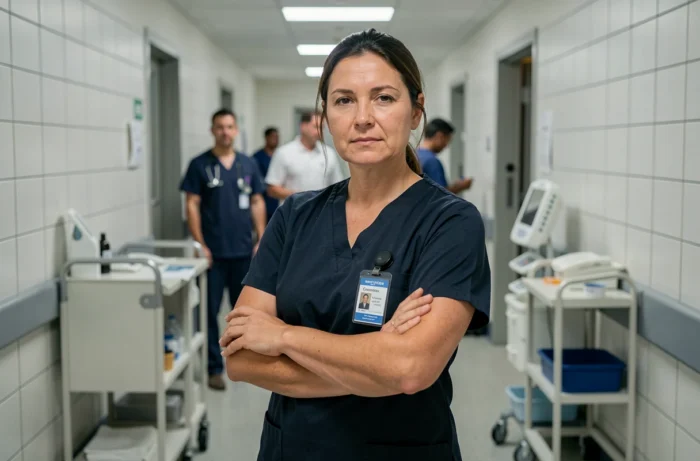
This evolution hits feminized intermediate jobs hard. Nurses, laboratory technicians, social workers, and technical assistants now face increased physical constraints alongside already high emotional demands. As analyses from Fusion Business point out, this double exposure remains poorly documented in discussions about professional equality, which focus more on wage gaps or access to leadership positions.
The gap between the general discourse on improving working conditions and the reality experienced by these professions creates a form of statistical invisibility. Intermediate professions are neither workers (thus not targeted by physical risk prevention policies) nor executives (thus absent from discussions about the glass ceiling). They occupy a gray area where alerts go under the radar.
Apparent gender mix in intermediate professions and occupational segregation
According to Insee, intermediate professions are the only truly mixed socioprofessional category at an aggregate level. This statistic is accurate, but it flattens a more fragmented reality.
| Socioprofessional category | Proportion of women (approx.) | Characteristic |
|---|---|---|
| Executives | About 40% | Persistent female minority |
| Intermediate professions | Close to parity | Overall mix, occupational segregation |
| Employees | About 75% | Highly feminized |
| Workers | About 20% | Highly masculinized |
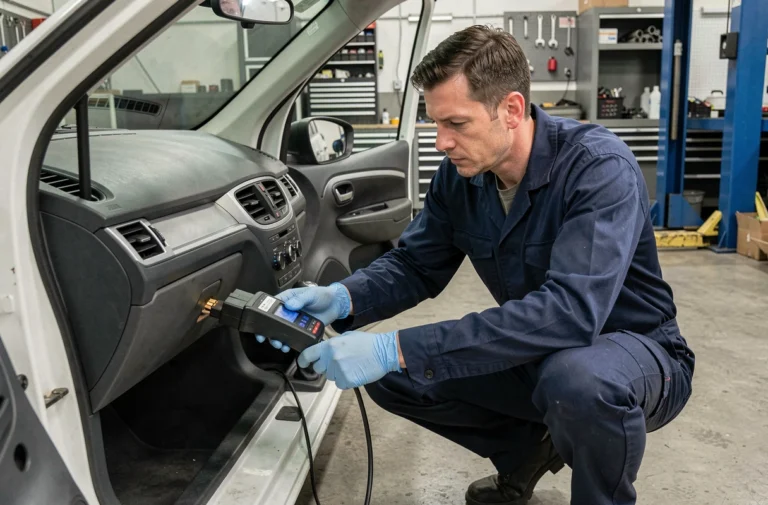
Parity at the category level does not mean that women and men perform the same intermediate jobs. Women are concentrated in care, social work, technical teaching, and assistance. Men dominate positions as industrial technicians, foremen, and field salespeople. The mix of intermediate professions is an average that conceals strongly gendered jobs.
Diverging working conditions depending on the occupation
This internal segregation produces concrete disparities in working conditions. Feminized intermediate jobs expose workers more to emotional demands (contact with disadvantaged populations, managing suffering, relational mental load). Masculine intermediate jobs expose workers more to chemical or mechanical risks but benefit from more structured prevention protocols.
The Dares 2024 survey confirms that four out of ten employees do not see themselves holding on until retirement in their current position. This figure, across all sectors, takes on particular significance in feminized intermediate professions, where weariness combines physical fatigue and emotional exhaustion.
Recruitment tensions and feminization: an underutilized lever
Several intermediate technical jobs face significant recruitment difficulties. Companies struggle to fill positions for technicians, team leaders, or maintenance specialists. In this context, the female workforce represents a potential reservoir that is still largely underutilized.
- Women represent less than a third of the workforce in industry (about 28.5%), and this proportion drops further in technical intermediate jobs.
- Stereotypes associating technical jobs with male physical hardship hinder female applications, even though many intermediate positions rely more on coordination and expertise than on strength.
- The devalued image of certain sectors (industry, construction, logistics) distances qualified profiles who turn towards tertiary fields perceived as more accessible.
Reducing these tensions requires action on two fronts simultaneously: making technical intermediate jobs visible to women in training, and adapting working conditions to avoid reproducing the patterns of physical wear already documented in feminized intermediate care and social jobs.
Statistics and research: still partial diagnostic tools
National surveys on working conditions rarely intersect socioprofessional category, gender, and detailed occupation in their summary publications. The data exists, but it remains scattered among Dares, Insee, and sectoral organizations. The lack of a unified dashboard hinders the management of gender mix policies at the level of intermediate professions.
Companies wishing to take action lack operational indicators to measure the real evolution of gender mix in their intermediate jobs, beyond simple counting of women and men by category.

The category of intermediate professions concentrates tensions that aggregated indicators do not capture. The increase in physical constraints documented by Dares between 2016 and 2024, combined with persistent occupational segregation, places women in this category in a specific situation. The data is there. Its translation into targeted prevention and recruitment actions remains the weak link.