
Daily well-being is measured through concrete indicators: sleep quality, screen time management, regular physical activity, and nutrition. Recent surveys shift the focus towards less frequently mentioned levers, particularly the relationship with digital tools and the ability to set limits on their use. Here are ten actionable tips, supported by factual data, to improve your well-being sustainably.
1. Keep your smartphone out of the bedroom
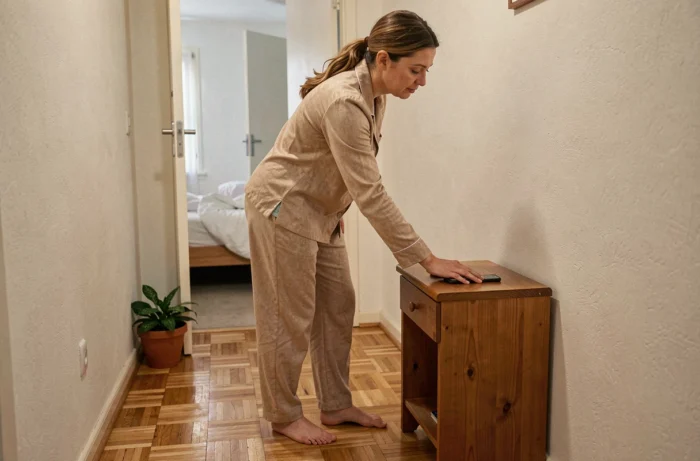
An OpinionWay survey for the National Institute of Sleep and Vigilance, published in 2026, indicates that 58% of French people sleep with their smartphone turned on next to them. Nearly a quarter are awakened by its notifications during the night.
Placing the device in another room, or at least activating airplane mode, eliminates this source of micro-awakenings. The benefit is not only in the duration of sleep but also in its continuity, a crucial factor for cognitive recovery.
A traditional alarm clock easily replaces the phone’s alarm function. This change requires a week of adjustment, no more.
2. Set intentional screen time rather than an arbitrary quota

The 2026 Digital Behavior Barometer, conducted for MILDECA, notes that more than half of those who watch online content often spend more time than intended. A significant proportion postpone professional or personal obligations due to these habits.
The issue is not screen time itself, but the lack of intention. Deciding in advance how much time you will dedicate to a piece of content (a series, a news feed) reduces the spiraling effect. Additional resources on these mechanisms are available on the soin-et-compassion.fr website, which discusses the link between digital habits and personal balance.
3. Protect the last hour before bed

The 2024 Insee survey reports that 25% of internet users aged 15 to 74 voluntarily limit their sleep time to spend more time in front of a screen. This behavior affects all age groups, not just teenagers.
Spending the last hour before bed on a non-digital activity (reading, preparing for the next day, stretching) creates a buffer zone. The goal is not to ban screens from the evening but to preserve this specific time slot.
4. Walk for thirty minutes a day without a sports goal

Daily walking remains the most accessible physical lever. Its effectiveness does not depend on intensity or distance covered. Walking at a comfortable pace, without a tracker or performance goal, is enough to improve blood circulation, posture, and mood regulation.
Incorporating this walk into an existing commute (home-work, errands) makes it more sustainable than a planned session that one ends up abandoning.
5. Reduce added sugar at breakfast

Breakfast often contains the largest share of added sugar for the day: industrial cereals, fruit juices, jams. Replacing just one of these items with a low glycemic index food (oat flakes, whole fruit, whole grain bread) changes the energy curve throughout the morning.
The adjustment is gradual. Starting with a single substitute for two weeks yields noticeable results without food frustration.
6. Take a micro-break without screens every two hours

Two to three minutes of break without visual stimulation every two hours is enough to reduce eye strain and neck muscle tension. This micro-break does not require meditation or any particular technique.
Get up, look out the window, stretch briefly. The goal is to cut the flow of visual information, not to fill this time with another activity.
7. Create a resting space distinct from the work area

With the rise of remote work, the boundary between professional space and personal space has blurred. Working from the couch or bed associates these places with professional stress, degrading the quality of rest.
Even in a small living space, physically delineating areas (a curtain, a separating piece of furniture, a change in lighting) helps the brain distinguish contexts. The effect is particularly noticeable on the ability to mentally disconnect at the end of the day.
8. Keep a gratitude journal focused on concrete facts

The principle of daily gratitude is well documented. However, its effectiveness depends on the specificity of the entries. Writing “I am grateful for my family” has little long-term effect.
Noting a specific fact from the day (“conversation with X that changed my mind about Y”, “fixed the bike without help”) anchors gratitude in real experience. Three factual entries per day are sufficient. Consistency matters more than quantity.
9. Limit information sources to two consultations per day

Continuous consultation of news feeds fuels a form of hyper-vigilance that weighs on mental well-being. Data from the MILDECA 2026 Barometer confirms that the difficulty in setting digital limits extends well beyond entertainment and also affects information.
Limiting yourself to two defined moments (morning and evening, for example) to check the news reduces this cognitive load without causing feelings of isolation. The rest of the time, news notifications remain turned off.
10. Sleep at a fixed time, including on weekends

The regularity of bedtime influences sleep quality more than total duration. Delaying sleep onset by two hours on Saturday night has an effect comparable to a time zone shift, sometimes referred to as “social jet lag.”
Maintaining a maximum difference of half an hour between weekdays and weekends stabilizes the circadian rhythm. This point is rarely applied, even though it is the most structuring factor for restorative sleep.
| Tip | Main Lever | Estimated Adjustment Time |
|---|---|---|
| Keep smartphone away at night | Sleep | 1 week |
| Intentional screen time | Cognitive load | 2 to 3 weeks |
| Protect the last hour | Sleep | 1 to 2 weeks |
| Daily walk | Physical activity | Immediate |
| Reduce sugar at breakfast | Nutrition | 2 weeks |
| Micro-break without screens | Eye strain | Immediate |
| Separate rest/work space | Mental disconnection | Variable |
| Factual gratitude | Mental well-being | 3 weeks |
| Limit news consultations | Cognitive load | 1 to 2 weeks |
| Fixed bedtime | Circadian rhythm | 2 to 4 weeks |
Among these ten levers, those related to screen and sleep management stand out as the most documented by recent surveys. The most effective adjustments require neither equipment nor budget, but a clear decision on what you are willing to change in your daily routine.