
Sterdex is an ophthalmic ointment in a soft capsule that combines two active ingredients: dexamethasone (a corticosteroid) and oxytetracycline (an antibiotic). This medication is prescribed by prescription for specific ocular situations, and its proper use directly conditions its effectiveness. If applied incorrectly, the ointment loses part of its action and may even expose the user to avoidable side effects.
Sterdex Soft Capsule: A Unique Format for Ophthalmic Ointment
Most ophthalmic ointments come in tubes. Sterdex, however, is packaged in a single-dose container in the form of a soft capsule. This difference changes the handling.
The capsule must be pierced or cut at one end to release the ointment. This action requires a bit of precision, as the amount contained in each single dose corresponds to a single application. If you press too hard or pierce the capsule on the wrong side, some of the product is wasted.
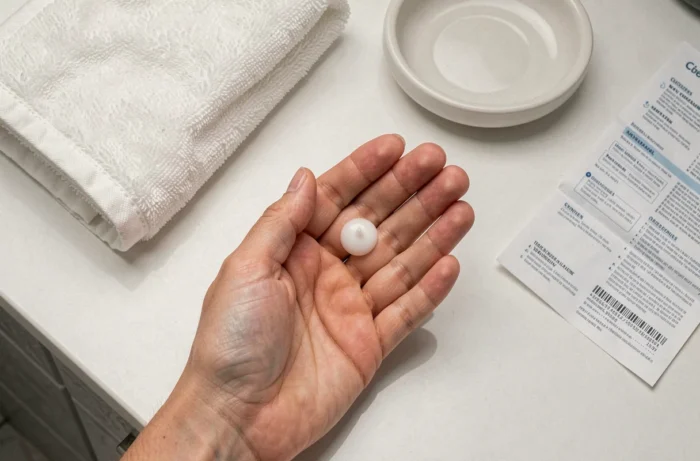
Before handling the capsule, warm it for a few seconds between your fingers. The ointment inside is greasy and semi-solid: at low room temperature, it is difficult to dispense. A slight warming makes it more fluid and facilitates application in the eye. If you want to know how to use Sterdex ointment without wasting the contents of the capsule, this simple action makes a real difference.
Applying Sterdex in the Eye: Detailed Technical Steps
You may have noticed that applying a product to the eye triggers an almost instant blinking reflex? This is normal, and it is precisely this reflex that needs to be anticipated to avoid missing the application.
Wash your hands with soap and water, then dry them thoroughly. Any trace of moisture on your fingers makes the capsule slippery.
- Lean your head back slightly and look up. With the index finger of your free hand, gently pull down the lower eyelid to form a small pocket (the “conjunctival sac”).
- Press the pierced capsule above this sac and deposit a ribbon of ointment about one centimeter long. Do not touch the eye or eyelashes with the tip of the capsule, as any contact contaminates the product.
- Close your eye gently, without squeezing. Press lightly with a clean finger on the inner corner of the eye (near the nose) for about two minutes. This action, called lacrimal point occlusion, prevents the ointment from migrating to the nasal passages and increases the contact time with the ocular surface.
- Dispose of the opened capsule immediately, even if there is still product left. The single-dose packaging is designed for one-time use.

After application, your vision will be blurry for several minutes. This is normal: the oily base of the ointment forms a film on the cornea. Plan not to drive or operate machinery immediately afterward.
Contact Lenses and Sterdex: An Incompatibility to Be Aware Of
Remove your contact lenses before each application. The oily excipients in the ointment adhere to the lenses, cloud them, and may alter their surface. Some recent recommendations specify that you should wait a sufficient time after application before putting your lenses back in, allowing time for the ointment to be absorbed.
If you wear daily disposable lenses, the simplest approach is to plan the application of Sterdex in the evening, after removing your lenses for the night. The ointment works while you sleep, and you can start fresh with new lenses the next morning.
Treatment Duration and Age Restrictions: Two Common Mistakes
Sterdex contains dexamethasone, a corticosteroid. Used for too long on the eye, a corticosteroid can cause an increase in intraocular pressure or promote a superinfection. The duration of treatment must remain short and strictly supervised by the prescribing physician.
Extending treatment for a few extra days “to be sure” is a common mistake. If symptoms persist at the end of the prescribed duration, consult rather than reopening a new capsule on your own initiative.
Another often overlooked point: Sterdex is reserved for adults and children over 8 years old. Oxytetracycline belongs to the tetracycline family, which is contraindicated in young children. Administering this treatment to a younger child without explicit medical advice constitutes a misuse to be absolutely avoided.
Pregnancy and Breastfeeding
The available data advises caution during pregnancy and breastfeeding. The leaflet mentions these situations as requiring systematic medical advice before any use. Do not start treatment with Sterdex if you are pregnant or breastfeeding without discussing it with your doctor or pharmacist.
In Which Cases is Sterdex Actually Prescribed?
Sterdex is not a “one-size-fits-all” ointment for red eyes. The antibiotic-corticosteroid combination is intended for specific situations: certain ocular infections with marked inflammatory components, or post-operative ophthalmological care where it is necessary to both prevent infection and control inflammation.
Using Sterdex for a simple viral conjunctivitis or temporary irritation would be inappropriate. The corticosteroid could even worsen certain viral infections of the eye, particularly herpetic ones. Only the prescribing physician decides if this combination is justified based on the diagnosis made.
The Sterdex ointment remains an effective ophthalmic treatment when used in the right context, with the correct techniques, and for the appropriate duration. Adhering to the single-dose packaging, removing contact lenses, not exceeding the prescription, and checking the age restriction are the four points that separate correct use from risky use.