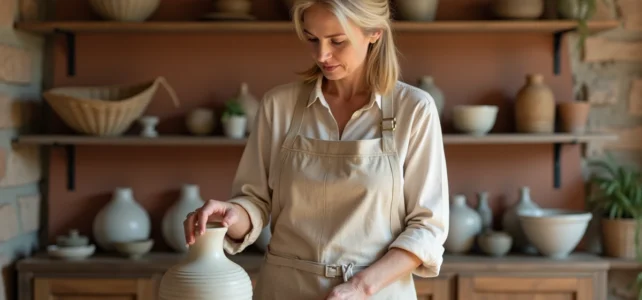
A handcrafted object is distinguished from an industrial product by a specific technical characteristic: the trace of the gesture. Irregularities in glaze on ceramics, visible grain on wooden furniture, slight asymmetry of a hammered metal light fixture. These variations are not defects; they constitute the signature of a manual manufacturing process. Integrating handcrafted creations into an interior introduces that tactile and visual dimension that mass production does not replicate.
Curved shapes and ribbed textures: the artisanal vocabulary replacing smooth minimalism
The decoration trends for 2025-2026 mark a break from flat surfaces and chrome finishes. Furniture and decorative objects are moving towards curved shapes and generous volumes, often described as “sculptural.” Hammered metal, vintage-inspired carved wood, and fluted textures are replacing smooth and straight lines.
This evolution directly benefits artisans. A potter shaping a vase with irregular walls, a blacksmith hammering a lamp base, a cabinetmaker carving flutes into a tabletop: their gestures produce exactly what current decoration seeks. The result does not need to be “perfect” in the industrial sense; on the contrary, it should showcase the worked material.
Exploring craftsmanship on Cœur Artisan allows you to spot pieces that correspond to this visual grammar, between textured clay, raw linen, and carved wood.
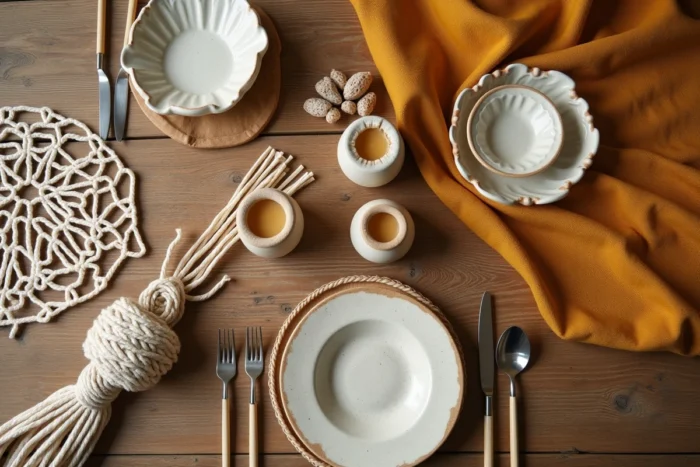
Among the most sought-after materials on creation sales platforms are clay, linen, rattan, and stone. These materials share a common point: they age. A stoneware platter develops a patina, a rattan basket softens, a linen textile wrinkles differently depending on use. The handcrafted object evolves with the interior instead of degrading.
Strong artisanal piece: structuring an interior around a single object
Decorators in 2026 emphasize a principle that generalist articles rarely address concretely: the notion of narrative pivot. Instead of evenly distributing decorative objects in every corner, one chooses a single large-scale handcrafted piece (wall tapestry, sculptural light fixture, solid wood furniture) and organizes the rest of the room around it.
This pivot works because it creates a focal point that directs the gaze. The rest of the furniture can be simple, even industrial. The contrast between a plain sofa and a large handwoven tapestry on the wall is enough to give character to an entire living room.
Choosing the right format for the pivot
Size matters as much as quality. A small ceramic bowl placed on a shelf does not structure a space. To serve as a pivot, the handcrafted object must occupy a significant visual surface:
- A tapestry or wall textile at least one meter wide, hung at eye level, visually anchors an entire wall
- A suspended light fixture made of natural materials (woven rattan, forged metal) draws the eye as soon as one enters the room and defines the lighting ambiance
- A carved wooden piece, such as a console or an organic-shaped coffee table, serves as an anchor point in a living room
The rest of the artisanal decoration (candles, small pottery, linen cushions) then comes in echo, without competing with the central piece.
Mixing wood types and intentionally mismatching
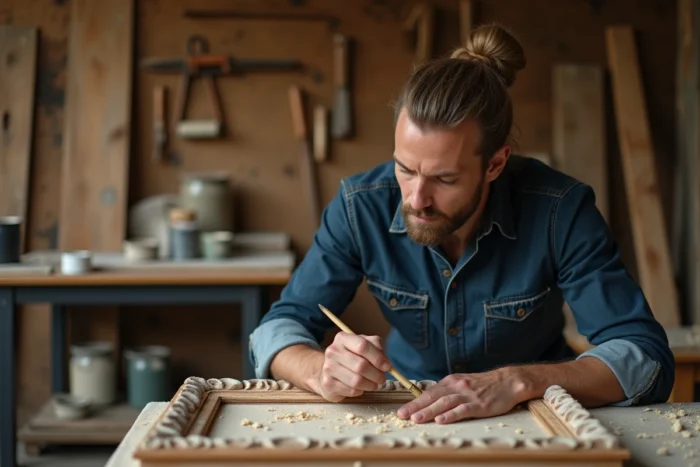
One of the most common reflexes in decoration is to match woods: same type, same shade, same finish for the table, chairs, and shelves. The trends for 2026 take the opposite approach. Mixing several types of wood in the same room creates a visual depth that perfect harmony does not allow.
A dark walnut tabletop paired with light beech chairs and a raw oak shelf produces a layering effect reminiscent of interiors accumulated over time. This intentional “mismatching” works particularly well with handcrafted pieces, because each piece of furniture already carries its own texture and variations in shade.
The same principle applies to artisanal textiles. A thick wool throw placed on a linen sofa, cushions in different weaves, a rug with patterns that do not exactly match the colors of the curtains: this layering of textile layers visually structures the space without resorting to a strict color code.
Artisanal ceramics and stoneware: concrete selection criteria
Ceramics are the most accessible category of craftsmanship to start integrating unique creations into your home. But not all ceramics are created equal, and a few technical criteria can distinguish a quality piece from a product that is simply “handmade.”
- Firing: a ceramic fired at high temperature (stoneware, porcelain) is more resistant to stains and moisture than low-temperature earthenware, making it usable daily and not just decorative
- Glaze: an irregular glaze is not a sign of poor quality, but drips that reach the base of the piece indicate a firing defect that can affect stability
- The foot: a neatly turned and unglazed foot (to prevent the piece from sticking to the kiln) indicates an artisan who masters their process from start to finish
A well-designed stoneware object transitions seamlessly from the countertop to the table. Vases, bowls, serving dishes: quality artisanal ceramics do not need to be confined to a display case.
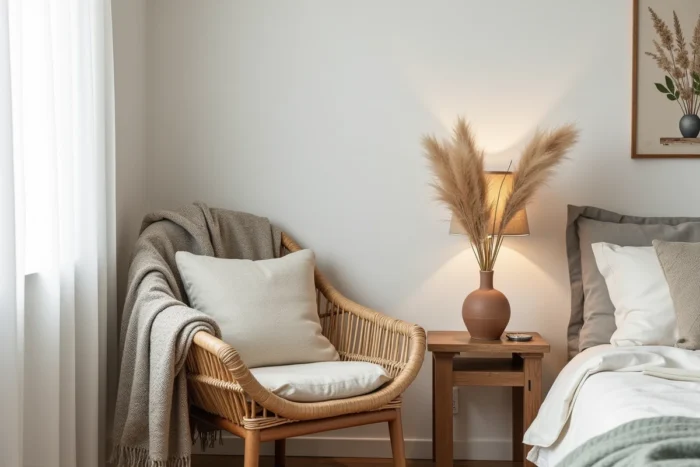
The return of large wall hangings and macramé tapestries reinforces an underlying trend: walls are no longer just painted surfaces. An artisanal textile hung up advantageously replaces a printed picture and adds an acoustic dimension by absorbing some sounds. In an interior where wood, ceramics, and handmade textiles coexist, coherence comes less from color than from the material itself, from its ability to bear the trace of craftsmanship.