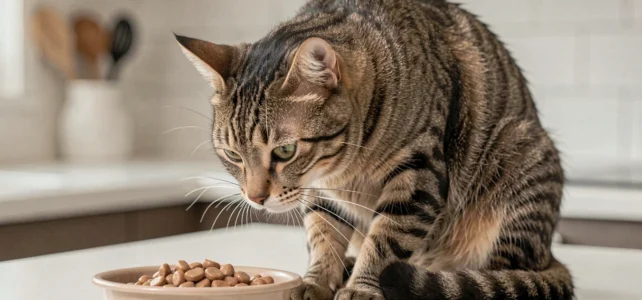
Sheba occupies a special place in the pet food aisles. A brand of the Mars Petcare group, it focuses on a premium positioning with recipes in sauce, jelly, or fillets. The pouches appeal to the most discerning cats, and owners appreciate the accessible price. However, one question that few comparisons clearly address is: do all Sheba references offer a complete diet, or are some merely disguised dietary supplements?
Complete food or complementary food: the distinction that Sheba blurs
European regulations require pet food manufacturers to clearly indicate whether a product is a complete food (covering all nutritional needs) or a complementary food (to be combined with another food source). At Sheba, this distinction varies from one range to another, sometimes even from one reference to another within the same range.
Some product sheets explicitly mention “complete and balanced meals for adult cats.” Other references, particularly fillets and shreds, are sold as complementary food. The problem is that the packaging does not highlight this information. An owner who buys a mega pack of assorted pouches may feed their cat daily with a product that has not been formulated to meet their needs on its own.
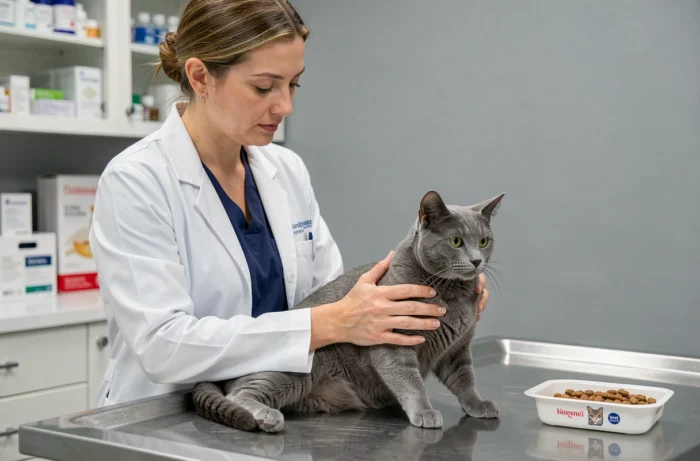
Before choosing Sheba as a staple diet, it is therefore necessary to turn each pouch over and read the regulatory mention in small print. A veterinary opinion on Sheba cat food confirms that this verification is the first step in evaluating the brand.
Sheba composition: what the ingredient list reveals
The analysis of the composition presents a mixed picture. Take, for example, the Special Sauce range, whose sheet is public: crude protein at 8%, fat at 5%, moisture at 82%. When adjusted for dry matter, the protein content reaches about 44%, placing this reference in a reasonable range for a pâté.
However, several elements raise questions when looking beyond the analytical figures.
- The mention “meat and animal by-products” remains vague. The percentage of named meat (chicken, for example) often represents only 4% of the total product, with the rest made up of unspecified by-products.
- Some recipes contain grains and added sugar. The sheet for Sheba Classics Geflügel Cocktail marketed in Europe mentions “Zucker” (sugar) in its composition, which contradicts the brand’s premium image.
- Estimated carbohydrates hover around 3% in some references, a low and acceptable rate. But the presence of grains in other ranges raises this figure without the consumer being able to easily compare.
The gap between the “gourmet selection” marketing and the reality of the ingredients deserves to be highlighted. An elegant package does not guarantee an exemplary composition.
Sheba as a daily pâté: the concrete limits
An indoor adult cat needs a diet rich in identified animal proteins, low in carbohydrates, and formulated to cover its needs for taurine, essential fatty acids, and minerals. Sheba checks some of these boxes in its “complete food” ranges but fails on other points.
High palatability, possible dependency
Feedback from owners on specialized forums converges on one point: cats love Sheba. This high palatability is an asset for recovering or picky cats. It becomes a disadvantage when the cat then refuses any other food.
On forum-chat.org, a recent testimonial describes a cat fed daily with Sheba pouches that developed diarrhea after a simple change of range within the same brand (switching to Fresh and Fine pouches). Digestive sensitivity related to a monotonous diet is a risk documented by veterinarians, regardless of the brand.
Named protein levels too low for exclusive feeding
With only 4% of identified meat in some recipes, the rest of the protein intake comes from by-products whose nutritional quality is variable. For exclusive daily use, veterinarians generally recommend pâtés displaying a significantly higher percentage of named meat.
Sheba pâté and alternatives: which cats does it really suit?
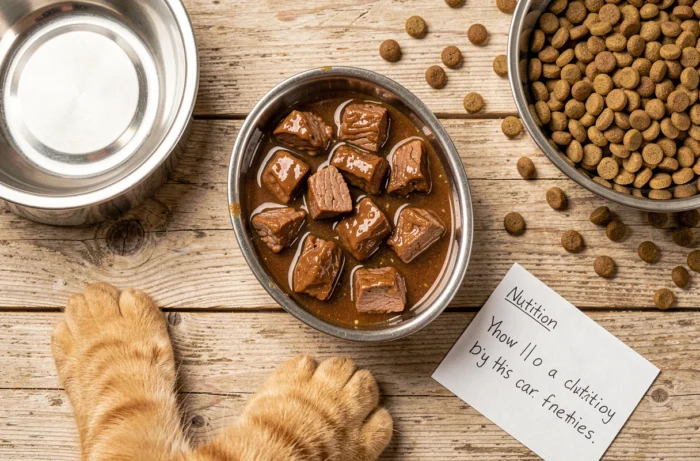
Sheba is not a bad pâté in itself. It fulfills a specific role that other brands do less well: offering a texture and taste that picky cats accept, at a price that remains reasonable compared to veterinary brands.
Its most consistent use, from a nutritional standpoint, can be summarized in three scenarios:
- As a complement to a complete food (quality kibble or other complete pâté), to vary textures and encourage hydration.
- As a temporary palatability pâté, for a recovering, elderly, or appetite-losing cat, while stabilizing its health.
- As an occasional treat, the fillets and shreds classified as “complementary food” serving this role without issue.
Using it as a unique and daily ration poses a risk of deficiencies in the long term, especially if the chosen reference is a complementary food. The ranges labeled “complete food” offer more guarantees, provided it is verified that the composition contains no unnecessary sugar or grains.
The choice of a cat pâté relies less on the brand than on the careful reading of each label. Two Sheba references can have radically different compositions. Reading the ingredient list remains the only reliable reflex, regardless of the product’s price or packaging.