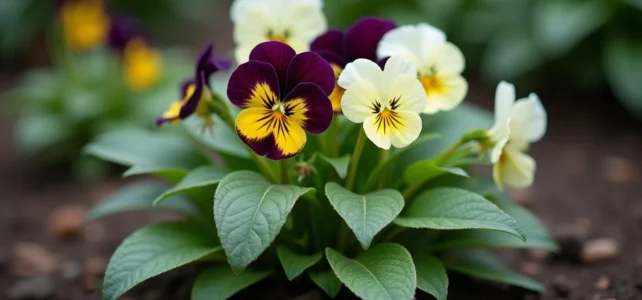
You water your pansy plants, you provide them with good soil, and yet some leaves turn white. The reflex is to suspect a disease. This is sometimes the case, but not always. Several distinct mechanisms can explain this whitening of the foliage, and confusing them often leads to unnecessary treatments.
Climate stress and white leaves on pansies: the overlooked clue
Most articles on the subject immediately point to powdery mildew. This makes sense: this fungus causes a visible white fluff. But there is another, less known cause that produces pale or almost white leaves without any trace of powder.
Have you ever noticed that after a brutal heat episode, the young shoots of your pansies emerge with abnormally light foliage? A heat shock on developing leaves destroys part of the chlorophyll even before it develops. The result: whitish, sometimes translucent leaves that never darken.
This phenomenon intensifies when pansies transition from a cool, overcast spring to direct, intense sunlight. The plant hasn’t had time to acclimate. The most exposed leaves whiten due to sunburn, without any fungus being involved.
Excess water also plays an indirect role. A soil that is constantly waterlogged blocks the absorption of certain nutrients, particularly nitrogen and magnesium. Without magnesium, the plant can no longer produce chlorophyll, and the leaves lose their green color. This is referred to as chlorosis, a technical term for foliage that yellows or whitens due to deficiency.
If you’re looking to understand why pansies have white leaves, this climatic and nutritional clue deserves exploration before blindly treating for a fungus.
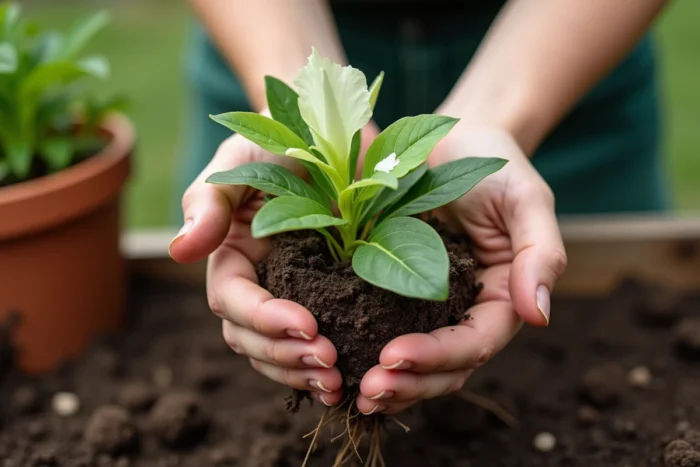
Powdery mildew on pansies: recognizing the real fungus
Powdery mildew remains the most common cause of white leaves on pansies. This fungus thrives particularly in warm and humid conditions. However, it has a precise visual signature that must be distinguished from other forms of whitening.
The powdery fluff, a marker of powdery mildew
Run your finger over the whitened leaf. If a white powder comes off, it’s powdery mildew. This deposit resembles flour and first concentrates on the upper side of the leaves. The powdery fluff is the only reliable sign of powdery mildew.
Without this powder, you are likely facing abiotic stress (heat, deficiency, excess water) or, more rarely, a genetic defect. Powdery mildew generally does not endanger the plant’s life, but it reduces its vigor and flowering.
Conditions that favor powdery mildew in the garden
- Watering from above that wets the foliage at the end of the day, followed by a warm, humid night: the fungus finds an ideal environment to germinate
- Overcrowded planting that prevents air circulation between the pansy plants, creating a pocket of stagnant moisture
- A soil rich in nitrogen but poor in potassium, which produces tender leaves that are permeable to spores
Watering at the base, never on the foliage, remains the most effective preventive measure. If powdery mildew is already present, removing the most affected leaves limits its spread.
Partial albinism in Viola: a rare but real case
Sometimes certain pansies produce entirely white leaves from the moment they emerge, without powder, without burn, without apparent deficiency. These leaves never turn green, even with perfect care.
This phenomenon corresponds to a genetic defect called partial albinism. The plant does not produce chlorophyll on certain shoots. It is sometimes observed in Viola x wittrockiana and its relatives, particularly in varieties from unsteady seeds.
The difference with powdery mildew is clear: albino leaves appear white from the start. They are smooth, without deposits. Often, only one shoot is affected while the rest of the plant retains normal green foliage.
This defect is neither contagious nor treatable. The only useful action is to remove the affected shoot so that the plant can concentrate its energy on the green parts capable of photosynthesis.
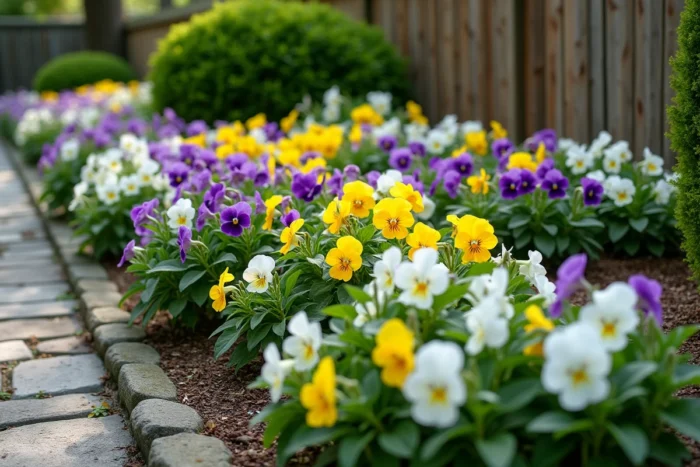
Quick diagnosis: identify the cause in three observations
When faced with white leaves on your pansies, three checks are enough to guide the diagnosis in the right direction.
- Touch the leaf: a powdery deposit that comes off on your finger indicates powdery mildew. Treat by removing the affected leaves and improving air circulation
- Observe the timing of appearance: if the leaf is white from the moment it emerges, without powder, it is either thermal burn (recent heat episode) or partial albinism (isolated shoot, the rest of the plant is green)
- Check the soil and watering: a constantly waterlogged soil, a pot without drainage, compact soil that retains water, all of these promote induced deficiencies. Good soil drainage prevents most non-fungal whitening
Each cause requires a different response. Treating a magnesium deficiency with a fungicide will not resolve anything. Changing watering when the problem is genetic won’t help either.
When should you really be concerned?
A whitening that remains localized on a few leaves does not threaten the plant’s survival. However, whitening that rapidly progresses across the entire foliage signals an active problem, whether powdery mildew or severe deficiency, that requires prompt intervention.
Removing affected leaves, spacing out waterings, moving the pot to partial shade during a heat wave: these simple actions resolve most cases without resorting to chemical treatment. Pansies are resilient plants. When the foliage whitens, it is almost always a warning signal that the plant sends about its growing conditions, not a condemnation.