
A quick move differs from a traditional move by a tight time constraint, often less than four weeks between the decision and the big day. This pressure compresses every step: sorting, packing, logistics, and formalities. The ten tips that follow target concrete actions to reduce mental load and unexpected events, from the rental notice to unloading the truck.
1. Check the receipt date of the notice, not the sending date
Most tenants calculate their notice period from the day they post their registered letter. The legal countdown starts from the date of receipt by the landlord, not the sending date. If the owner only collects the mail several days later, the notice period is extended accordingly.
This delay can lead to unexpected additional rent and delay the entire schedule. Prioritizing hand delivery with a signature or a bailiff’s act speeds up the start of the notice period. For a one-month departure, this verification is the first action to take, well before touching a box.
Some moving tips on Easy Home detail this type of formality often underestimated during an express housing change.
2. Activate the one-month reduced notice when conditions are met
In unfurnished rentals, the standard notice period is three months. The ALUR law of 2014 established a reduced notice period of one month in several situations: housing located in a tense area, obtaining a first job, professional transfer, job loss, or health conditions justifying a move.
This provision remains largely underutilized. Many tenants pay two or three additional months of rent even though they meet the criteria. Checking eligibility as soon as the decision to move is made allows for budget relief for transport or temporary storage.
3. Create a photographic inventory room by room
Before packing anything, photograph each room and each piece of furniture (drawers, closets, shelves). This visual inventory serves three functions:
- It acts as proof in case of disputes with a mover or an insurance company if items are damaged during transport.
- It facilitates sorting by making all belongings visible, including those forgotten at the back of storage.
- It speeds up the reassembly of furniture in the new home, with each photo serving as a reference to find the original layout.
A smartphone is sufficient. Naming folders by room (kitchen, bedroom 1, garage) avoids searching for the right image on the big day.
4. Sort using the three-pile method before touching a box
Sorting is the only step that physically reduces the volume to be moved. Apply a simple rule: each item goes into one of three piles, keep, give away, or throw away. No item remains in a hypothetical fourth pile “to decide later,” which always ends up in a box.
Less volume means fewer boxes, a smaller truck, and a shorter unloading time. For a quick move, starting the sorting with the least used rooms (basement, attic, guest room) frees up maneuvering space in the home from the first days.
5. Pack boxes by area, not by category
Group the contents of a box by destination room, not by type of item. A box labeled “kitchen – countertop” contains everything that was on the countertop: small appliances, utensils, spices. This logic prevents scattering items from the same area into ten different boxes.
Label each box on two sides with the name of the destination room and a sequential number. This system allows those unloading the truck to place each box directly in the correct room, without additional handling.
6. Protect furniture with what is already in the home
Blankets, bath towels, sheets, and thick clothing serve the same purpose as bubble wrap for cushioning fragile items in boxes and protecting furniture corners. This technique reduces supply costs and decreases the number of boxes.
Wrap table legs in thick socks, slide dish towels between stacked plates, and cushion glasses with t-shirts: every textile used is one that doesn’t take up space in a separate box.
7. Reserve the truck based on actual volume, not the number of rooms
The pricing grids of utility vehicle rental companies are based on volume in cubic meters. Estimating volume based on the number of rooms often results in an overestimate, especially after a good sort.
Count the number of boxes, measure the largest furniture (length, width, height), and add up the volumes for a reliable estimate. A truck that is too large costs more to rent and in fuel, while a truck that is too small requires a second trip.
8. Load the truck starting with heavy furniture at the back
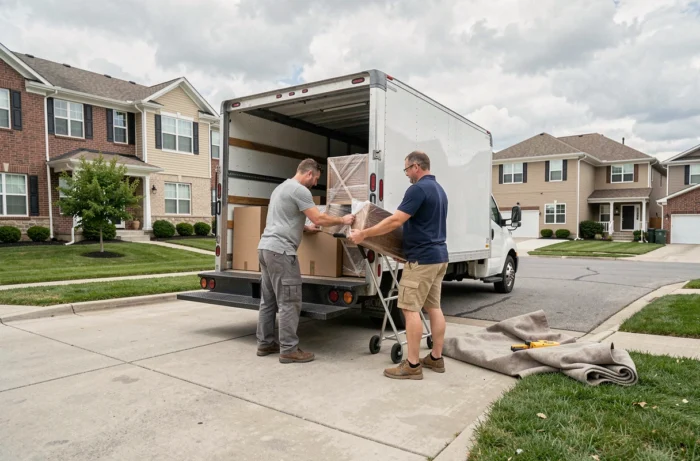
The loading order affects stability during transport and the speed of unloading. The heaviest and bulkiest furniture (wardrobes, sofas, refrigerators) should go against the back wall, near the cab.
Heavy boxes (books, dishes) go at the bottom, with lighter boxes on top. Filling every gap with cushions or soft bags prevents shifting. A well-secured load does not require additional straps and unloads in reverse order, from lightest to heaviest.
9. Prepare an immediately identifiable first-night box
This box contains everything you will need in the first twelve hours after arrival, before unpacking everything:
- Sheets, pillows, bath towels, complete toiletry kit.
- Phone chargers, power strips, bedside lamp.
- Basic cleaning products (sponge, dish soap, trash bag), toilet paper, common medications.
This box goes in last in the truck and comes out first. Marking it with a bright color (red tape, for example) makes it instantly recognizable.
10. Update contracts and subscriptions before the big day
Administrative formalities postponed after the move accumulate and become a source of lasting stress. Transferring or canceling energy, internet access, and home insurance contracts at least two weeks before the scheduled date ensures service continuity in the new home.
The grouped address change with La Poste allows for mail redirection for several months. Also remember to update the address with the bank, health insurance, and tax office. Consolidating these tasks into a single half-day avoids forgetfulness and follow-ups.
The most determining factor for a stress-free move remains the sequence of actions. Settling the notice and sorting before thinking about boxes, loading the truck methodically, keeping an accessible first-night box: each well-ordered step eliminates a friction point on the big day.