
Building a custom house in France is not just about choosing the color of the shutters or the shape of the roof. It is a construction project that involves a budget, land, a contract, and specific regulatory constraints. Understanding these parameters before signing anything changes the very nature of the final result.
RE2020 and carbon thresholds: what really limits customization
Can you imagine a large triple-glazed bay window, a cathedral ceiling, and a raw concrete facade? Such choices now face a regulatory wall. Since January 2022, the RE2020 imposes carbon footprint ceilings on materials and construction for new individual houses. The Ic construction indicator, which measures the CO₂ emitted per square meter, has decreased from about 640 kg CO₂eq/m² in 2022 to about 530 kg CO₂eq/m² since January 1, 2025.
New tightening measures are planned for 2028 and then for 2031. In practical terms, each material chosen to customize your house (type of concrete, joinery, insulation, facade cladding) consumes part of this carbon budget. A highly customized project with complex volumes and carbon-heavy materials requires a trade-off between aesthetics and compliance with the thresholds.
Few builders detail this trade-off during the initial meetings. Requesting the projected carbon balance of the project before signing the contract allows you to know what margin for customization remains available. Each house model offered by a builder has a descriptive sheet accessible, as can be seen on the maisonseurofrance.fr website in detail, which helps to compare the bases before considering modifications.
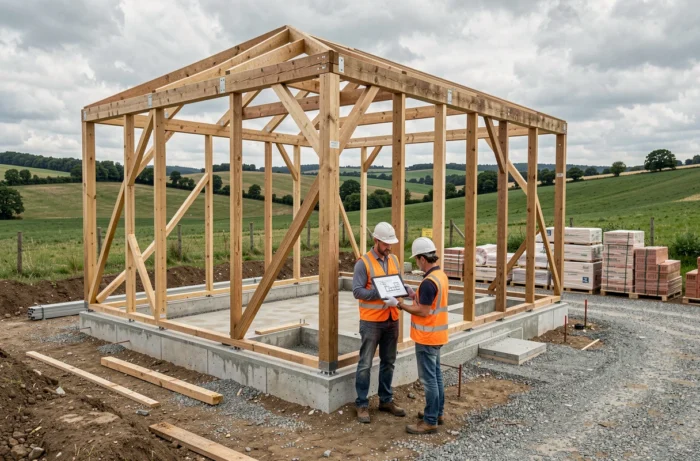
Heating a new house: limited customization options
Why is this topic so rarely addressed in construction guides? Because it limits a choice that many consider taken for granted. The RE2020 sets a maximum threshold of 4 kg CO₂eq/m²/year for greenhouse gas emissions related to energy. This ceiling effectively excludes 100% gas heating in a new house.
For a custom house, this means that the heating system is no longer a free choice. Heat pumps, hybrid systems, and wood solutions (stove, pellet boiler) become the realistic options. Direct electric heating via convectors is technically possible, but the primary energy consumption thresholds make this option difficult to maintain in a customized project with large glazed surfaces.
The choice of heating also influences the overall budget. An air-water heat pump represents a higher initial investment than a conventional gas boiler, but the construction contract (CCMI) must include this item. Ensure that the quoted price includes the heating system compliant with RE2020.
CCMI and guarantees: the legal framework of the customized project
The individual house construction contract (CCMI) is the most protective legal framework for the project owner in France. When you build a customized house with a builder, this contract is mandatory as soon as the builder provides the plan. It includes several guarantees that secure the construction site and life after delivery:
- The guarantee of delivery at the agreed price and deadlines, backed by a financial organization, which protects against the builder’s failure during the work
- The perfect completion guarantee, valid for one year after receipt, which covers all defects reported at delivery or that appear within the year
- The ten-year guarantee, which covers damages compromising the solidity of the work or rendering it unfit for its intended use for ten years
A point often misunderstood: customization requested after signing the CCMI generates amendments. Each modification (adding a window, changing a partition, upgrading materials) must be the subject of a written amendment with a new price. Without an amendment, the builder is not obliged to carry out the modification, and the guarantees do not cover work outside the contract.
What the CCMI does not cover
Work that you carry out yourself or that you entrust to artisans outside the contract (painting, fitted kitchen, outdoor layout) falls outside the scope of the CCMI. If an external artisan intervenes on the site and causes damage, liability can become blurred. It is better to list precisely the reserved works at the time of signing.
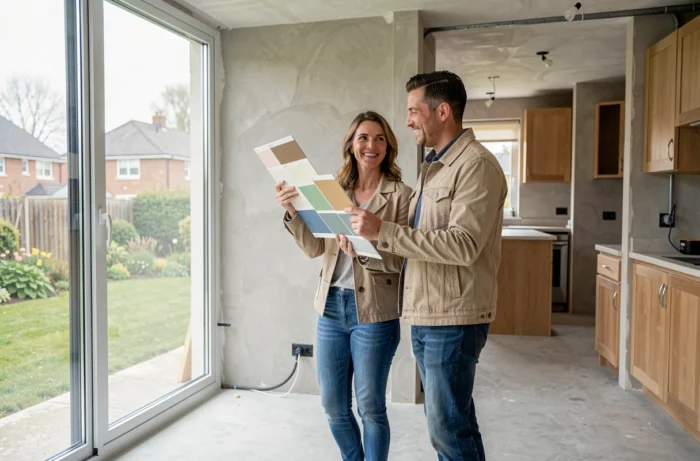
Land and PLU: local constraints that shape your house
The local urban planning plan (PLU) of the municipality where your land is located dictates precise rules. Maximum height, footprint, distance from property boundaries, roof slope, facade colors: these constraints apply before any desire for customization.
Have you spotted a sloping plot with an unobstructed view? The PLU may impose a ridge height that makes your project for a two-story house with a flat roof impossible. In certain protected areas (perimeter of a historic monument, ABF zone), the architect of the Buildings of France must validate the plans. This process adds several weeks to the construction schedule.
Before purchasing land, request the operational urban planning certificate from the town hall. This document indicates the applicable rules and any easements. A serious builder integrates this step into the project support, as poorly analyzed land can render the entire initial budget void.
- Check the actual buildability of the land (soil type, connections, access)
- Consult the PLU to know the architectural limits
- Request an operational urban planning certificate before any promise of sale
Building a customized house in France relies on a balance between your desires and a technical, regulatory, and contractual framework that is tightening year by year. The carbon thresholds of the RE2020, restrictions on heating, CCMI rules, and PLU constraints form a real perimeter. Customizing it intelligently means first knowing it.