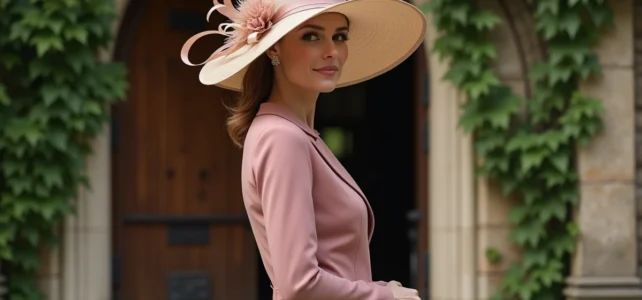
The ceremonial hat for a wedding refers to any headgear worn by a guest or family member during a nuptial celebration, whether civil or religious. Far from being just a decorative accessory, it adheres to a set of conventions that dictate its shape, size, and color based on the role of the wearer and the degree of formality of the event.
Materials and structures of a wedding ceremonial hat
Before considering color or style, the choice of material determines everything else. A hat made of sisal or parasisal offers natural rigidity that allows for wide shapes, like the wide-brimmed hat, without sagging throughout the day. Wool felt, more suitable for autumn or winter weddings, adds volume and a matte texture that pairs well with woolen or velvet outfits.
The internal structure is just as important as the visible fabric. Artisan millinery hats often use a frame made of straw (woven plant fiber) that the milliner shapes on a wooden form. This technique ensures that the hat retains its silhouette even in windy conditions or after several hours of wear.
To choose a suitable wedding ceremonial hat for women according to the season, prioritize breathable natural materials in summer and denser fibers as temperatures drop. A cheap synthetic straw hat is likely to lose its shape after a few hours, ruining the desired effect.
Hat etiquette rules according to the guest’s role
Not all guests have the same latitude. The mother of the bride traditionally wears the most imposing hat after that of the bride herself. This hierarchical privilege is observed in formal ceremonies, especially religious ones.
The mother of the groom may also wear a hat, but courtesy dictates that she discuss it with the mother of the bride to avoid a model that is too similar or of competing dimensions. This coordination, rarely mentioned in guides, helps avoid awkward situations on the day of the ceremony.
Close guests and distant guests
The bridesmaids and close friends tend to opt for a fascinator or a small hat, a little ornament secured with a clip or comb. These pieces add a touch of elegance without visually encroaching on the mothers’ headpieces.
Guests without direct family ties are free to wear a medium-brimmed hat, provided they adhere to two principles: never exceed the width of the mother of the bride’s hat, and avoid choosing white or cream, colors reserved for the bride.
Allowed colors and colors to avoid for a wedding
White, ivory, and pure cream are reserved exclusively for the bride. Wearing a hat in these shades, even when paired with a colorful outfit, creates visual confusion in photos and can be perceived as a serious breach of etiquette.
- Pastel tones (powder pink, sky blue, lavender) remain safe choices for a daytime ceremony, as they easily match most ceremonial dresses without drawing attention.
- Bright colors (true red, saffron yellow, emerald green) work for an outdoor summer wedding, provided the outfit remains understated to balance the overall look.
- Dark shades like black, chocolate, or khaki, long considered inappropriate, have been gaining ground for civil weddings in recent years. Pairing them with luminous materials (silk, satin) or gold jewelry is enough to avoid any funereal connotation.
Black is no longer an absolute taboo for a civil wedding hat. This recent evolution is particularly observed in structured outfits like suits, where a dark hat adds a bold graphic touch.
Hat proportions and face shape
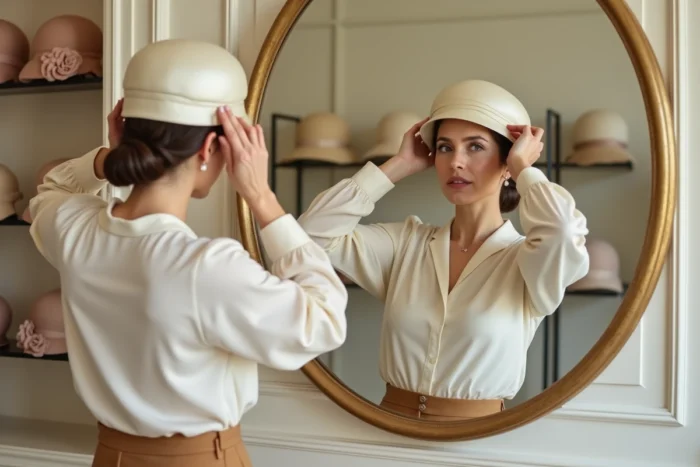
An ill-proportioned hat, even if luxurious, creates an unbalanced effect. The basic principle: the hat’s brim should never be narrower than the width of the face. A round face benefits from wearing a hat with a high crown and asymmetrical brims, which elongates the silhouette.
An elongated face pairs better with wide, horizontal brims that compensate for verticality. The wide-brimmed hat or cloche hat with slightly descending sides works particularly well in this case.
Hat size and comfort during the ceremony
A detail often overlooked: the hat should not obstruct the view of people sitting behind you during the religious ceremony. A large-brimmed hat can block the view of an entire row. Choosing a model that does not exceed shoulder width is a rarely articulated but appreciated rule of etiquette.
The weight of the hat also affects comfort. An overly heavy model can cause neck pain after a few hours. Ensure that the hat stays in place without effort by moving your head in several directions before finalizing your choice.
When to remove the hat during the reception
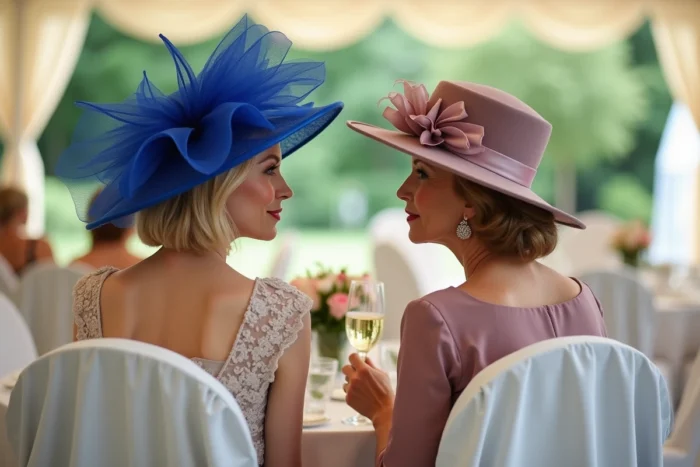
Etiquette dictates that the hat is worn during the ceremony and cocktail, then removed at the time of the seated dinner. This convention has a practical reason: at the table, a wide-brimmed hat obstructs conversations and movements.
Fascinators and small hats, on the other hand, can be worn all evening since they do not extend beyond the profile of the head. This is an additional argument in favor of these small pieces for guests who wish to remain elegant from start to finish without worrying about when to remove it.
Plan a hairstyle that remains impeccable once the hat is removed. A low bun or styled waves hold up better under the pressure of the hat than a sleek blowout, which may visibly flatten.