
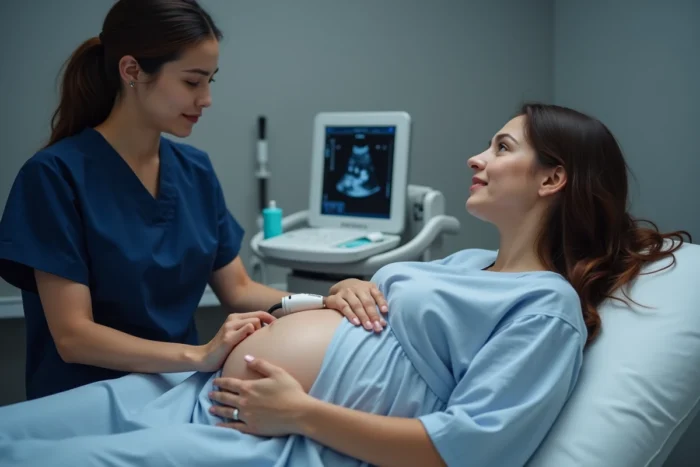
During the first ultrasound, a tiny embryo is observed attached to the uterine wall. However, exchanges between the mother and the fetus have already begun well before this appointment. These transfers, initially rudimentary, gradually organize around the placenta, the umbilical cord, and the amniotic fluid to support the baby’s development throughout the pregnancy.
Fetal Microchimerism: Cells Cross the Barrier as Early as the First Weeks
The placenta is often referred to as the main interface for mother-fetus exchanges, but a lesser-known phenomenon begins even earlier. From the fourth or fifth week after fertilization, fetal cells migrate into the maternal bloodstream. This cellular transfer, known as fetal microchimerism, increases as the pregnancy progresses.
These cells do not disappear at birth. Research in pregnancy immunology, particularly by the teams of Nelson and Khosrotehrani, shows that they can persist in the maternal body for decades. They can be found in various tissues, opening up avenues for understanding their role in long-term maternal health.
Recent studies suggest that these fetal cells may participate in a form of immune surveillance of malignant cells in the mother. The hypothesis of a protective effect against certain cancers (breast, ovarian) is under investigation, beyond the already documented hormonal influence. To better understand when mother-fetus exchanges begin, it is worth noting that these cellular transfers even precede the complete establishment of the placenta.
Placenta and Umbilical Cord: The Platform for Nutritional and Gaseous Exchanges
The placenta does not function as a simple filter. It is a temporary organ that develops from the trophoblast, the outer layer of the embryo attached to the uterine wall. During the first trimester, its structure gradually takes shape. The blood exchange between the embryo and the placenta is not yet operational at the very beginning: at six weeks of amenorrhea, this circuit is still under formation.
Once the placenta is mature, exchanges occur through the chorionic villi, extensions that bathe in maternal blood without the two circulations mixing directly. The maternal blood and fetal blood never mix: nutrients, oxygen, and waste cross a thin membrane by diffusion or active transport.
What the Placenta Concretely Transfers
- Oxygen passes from maternal blood to the fetus, while carbon dioxide makes the reverse journey, via the umbilical cord that connects the baby to the placenta.
- Nutrients (glucose, amino acids, fatty acids) are filtered and transported to support the growth of organs, particularly the brain, which begins to develop rapidly from the first trimester.
- Maternal antibodies of the IgG type cross the placenta, especially during the third trimester, to provide the baby with temporary passive immunity before birth.
- Some harmful substances (alcohol, nicotine, medications) also cross this barrier, which justifies precautions during pregnancy.
The umbilical cord, operational from about the fifth week, contains two arteries and one vein. The arteries carry deoxygenated blood from the fetus to the placenta, while the vein returns oxygen-rich blood and nutrients.
Hormonal and Neuro-Sensory Exchanges During Pregnancy
The placenta does not solely manage nutritional logistics. It produces hormones that modify the maternal body to maintain the pregnancy. Placental progesterone and estrogens influence maternal metabolism, adapt blood volume, and prepare the breasts for breastfeeding.
The exchange is bidirectional on a hormonal level. Maternal cortisol, when present in high quantities (prolonged stress), can cross the placental barrier. Chronic maternal stress influences the hormonal environment of the fetus, even though the placenta neutralizes part of it through a dedicated enzyme. Reports vary on the extent of this effect according to studies, but the mechanism of passage is well documented.
In Utero Sensory Interactions
From the second trimester onward, the fetus perceives stimuli from the outside. Amniotic fluid transmits sound vibrations: the mother’s voice and body noises (heartbeat, digestion) reach the baby in a muted but constant manner.
By the fifth month of pregnancy, the fetus reacts to sounds with noticeable movements in the belly. The flavors of the mother’s diet also alter the composition of the amniotic fluid, exposing the baby to varied tastes even before birth. The fetus discovers flavors through amniotic fluid starting in the second trimester.

Placental Barrier: What Passes and What Does Not
The placenta is often imagined as an absolute protection. In practice, its permeability is selective and varies according to gestational age. Small molecules (oxygen, glucose, alcohol) pass easily. Large molecules like maternal insulin or certain bacteria are blocked.
Some infectious agents cross this barrier. Toxoplasma, cytomegalovirus, or rubella virus can reach the fetus and cause varying damage depending on the trimester of contamination. This is why serologies are performed at the beginning of pregnancy and regular ultrasound monitoring is conducted.
Medications represent another point of vigilance. Each molecule has a different placental passage profile, which explains why a seemingly harmless treatment outside of pregnancy may become contraindicated during it. Medical follow-up adjusts prescriptions trimester by trimester based on the maturity of the placenta and the baby’s organs.
Mother-fetus exchanges form a system that becomes more complex with each week of pregnancy, from early cellular transfer to sensory interactions in the third trimester. The placenta orchestrates most of these transfers, but it does not act alone: amniotic fluid, the umbilical cord, and maternal hormones contribute to a balance that medical monitoring checks for proper functioning at each ultrasound.