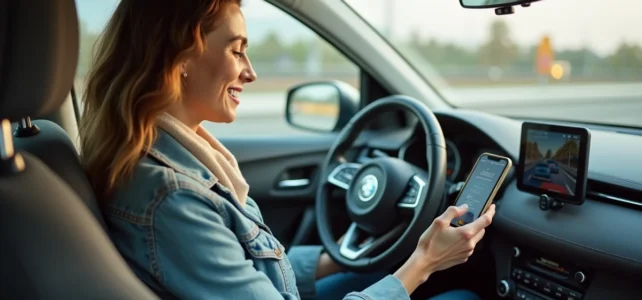
The price of a Blablacar trip is not set randomly. The platform offers a suggested fare calculated based on the distance and estimated fuel costs, but the driver has the final say on the amount. Understanding this pricing mechanism, especially the recent technical levers, makes the difference between a carpooling trip that barely covers tolls and one that reimburses a real part of the monthly car budget.
BlaBlaGas, paid detours, and multi-publishing calendar: the game-changing tools of 2026
BlaBlaCar launched three features in 2026 that most drivers underutilize. The first, BlaBlaGas, is an interactive map based on official public data. It locates the cheapest gas stations along the planned route, reducing the actual cost of the trip even before picking up a passenger.
The second feature concerns paid detours. A passenger can now propose a specific detour via the integrated messaging system, with an associated surcharge. We recommend evaluating the detour in terms of time and fuel before accepting: a slight detour of a few kilometers remains profitable, while a thirty-minute detour in an urban area is almost never worth it.
The third tool, the multi-publishing calendar, allows a driver to duplicate a route across multiple dates in seconds. A driver can publish up to ten simultaneous trips (twenty for round trips). For those discovering the benefits of Blablacar on Aide Auto, this feature illustrates the time savings for recurring trips well. The more visible the trip is in advance, the higher the occupancy rate, and it is the occupancy that determines actual profitability.
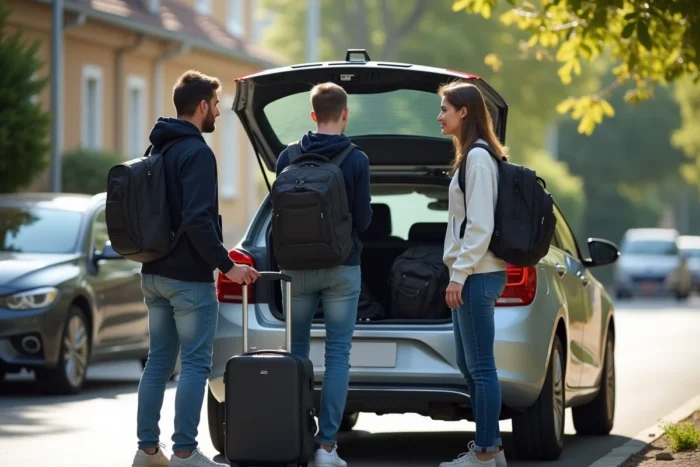
Blablacar Pricing: Setting the Right Price per Trip
A price that is too low attracts bookings but does not cover costs. A price that is too high leaves empty seats. The suggested fare from the app serves as a starting point, not a ceiling.
We observe that drivers who adjust the price slightly below the suggested fare on highly competitive routes (Paris-Lyon, Bordeaux-Toulouse) fill their cars faster. On less frequented routes, the suggested fare or a slight increase passes without difficulty, due to a lack of alternatives for the passenger.
Tolls: Include or Exclude from the Price
The platform offers to include the toll in the calculation. Excluding the toll artificially inflates the apparent margin but drives away passengers who are attentive to the total displayed cost. On a long trip with several highway sections, transparency about the toll improves the booking confirmation rate.
Number of Seats and Effect on Net Income
Offering three seats instead of two does not divide comfort by three, but increases potential income by half. The trade-off depends on the vehicle. A sedan with a narrow back seat filled with three passengers generates poor reviews that penalize subsequent trips. Two comfortable passengers yield more in the medium term than three frustrated passengers.
Optimize the Visibility of Your Trips on the App
The Blablacar search algorithm ranks results based on several criteria. The driver profile plays a direct role in positioning.
- A verified profile picture and filled-out trip preferences (music, conversation, pets) increase the click-through rate on the ad. An incomplete profile appears lower in search results.
- Passenger reviews are the main trust signal. After each trip, a reminder is sent to the passenger. We recommend leaving a review first: reciprocity encourages the passenger to respond.
- The Super Driver status rewards the highest-rated and most reliable drivers. This badge increases profile visibility and the number of booking requests.
- Publishing the trip several days in advance (via the multi-publishing calendar) gives more exposure time in the results.
Daily Carpooling with BlaBlaCar Daily: An Underestimated Lever
BlaBlaCar Daily targets short and recurring trips (home-work, school, gym). Earnings per passenger range from 1.50 to 8 euros per trip depending on the distance. Over a full month of daily trips, the average savings estimated by the platform reaches about 130 euros for two trips per working day.
The app operates differently from long-distance BlaBlaCar. Matching is automatic, based on geolocation and declared schedules. There is no need to manually publish each trip.

Employer and Community Subsidies
Some daily trips are subsidized by local authorities or employers as part of mobility plans. The sustainable mobility package allows the employer to cover the carpooling costs for the employee, making the trip even cheaper for the passenger and thus more attractive for filling the car.
Carpooling Lanes: A Concrete Advantage in Urban Areas
Carpooling radars based on artificial intelligence are deployed on certain reserved lanes in France. These devices analyze the number of occupants in the vehicle to control access to dedicated lanes.
For the BlaBlaCar Daily driver, access to reserved lanes reduces travel time during peak hours, making carpooling more competitive compared to solo trips. The advantage is not just financial: a faster trip retains regular passengers, stabilizing the occupancy rate throughout the week.
BlaBlaCar counts over 100 million members worldwide and more than 40 million shared trips per year. The network continues to expand, with a recent rollout in about twenty new countries thanks to artificial intelligence. For a French driver, this density of members remains the primary factor for filling seats: the more passengers registered on a route, the higher the probability of covering road costs on each trip.