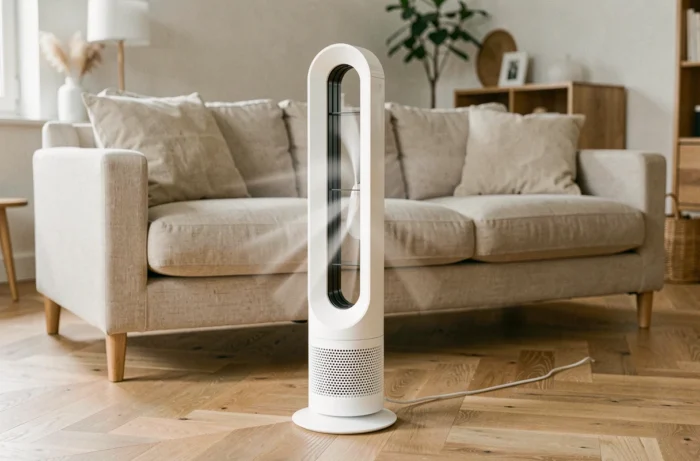
An air cooler operates on the principle of evaporative cooling: the water contained in a reservoir is pumped to a wet filter, and the ambient air loses a few degrees as it passes through. This simple mechanism, without refrigerant gases, distinguishes these devices from portable air conditioners and places them in a separate category for summer home comfort.
Evaporative cooling and misting: two mechanisms in one device
Most conventional fans simply circulate air without changing its temperature. The air cooler adds water evaporation, which actually lowers the perceived temperature by a few degrees. When the device combines a misting function, it also sprays fine droplets into the airflow.
This dual action (evaporation on a wet filter and direct misting) explains why a cooler like the available Confort Line fan provides a more pronounced feeling of coolness than a simple standing fan. The trade-off: the room needs to be ventilated regularly to avoid saturating it with humidity.
A often overlooked point concerns the ice packs placed in the reservoir. They keep the water at a lower temperature for longer, extending the cooling effect without additional electricity consumption. Without them, the water quickly reaches ambient temperature, and the device then behaves like an ordinary fan.

Electricity consumption of an air cooler compared to a portable air conditioner
The difference in consumption between these two categories of devices is significant. A Confort Line air cooler operates with modest power, whereas a portable air conditioner requires several times more energy to produce cold air.
An air cooler consumes significantly less than a portable air conditioner, which directly reflects on the electricity bill during heatwaves. For daily use of several hours during the summer months, the accumulated difference becomes tangible.
This energy efficiency aligns with a European regulatory trend. Regulation (EU) 2024/1834, which will come into effect on July 24, 2026, will raise the minimum energy efficiency thresholds for fans. Manufacturers will also need to ensure access to spare parts for professional repairers for a minimum duration of ten years after the product is placed on the market. Choosing a device from a brand already committed to this sustainability logic reduces the risk of ending up with an obsolete or irreparable product.
Three speeds and oscillation: adapting the airflow to the room
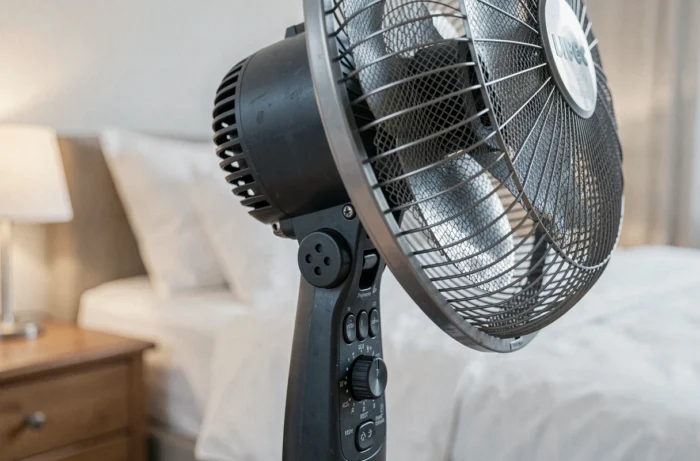
A cooler with multiple ventilation levels allows you to adjust the airflow according to the situation. The lowest setting is suitable for a bedroom in the evening, while the maximum speed covers a living room or open space during the day.
The oscillation of the airflow plays an underestimated role. Without it, the cooling focuses on a narrow area, which requires manually adjusting the device. With oscillation, the coolness is distributed over a wider arc and benefits several people sitting in the same room.
Here are a few criteria to check before choosing an air cooler:
- The capacity of the water reservoir, which determines the autonomy between refills. A reservoir that is too small requires frequent interruptions during the day.
- The noise level during operation, especially if the device needs to run at night. Some models exceed the acceptable threshold for a bedroom.
- The presence of wheels and the total weight, which affect the ease of moving from one room to another.
Air cooler and usage limits in humid climates
Evaporative cooling loses effectiveness when the ambient air is already saturated with humidity. In coastal regions or during thunderstorms, evaporation slows down, and the perceived temperature drop decreases. This is not a defect of the device; it is a physical limitation of the process.
In dry climates, an air cooler reaches its full potential. In humid climates, it remains useful due to air circulation, but the difference with a conventional fan diminishes. Keeping windows slightly open during use prevents humidity accumulation in the room, a point that several guides fail to clarify.
For poorly ventilated rooms (basement, studio without an opposite window), an air cooler is not the best choice. A tower fan or ceiling fan would be more suitable, as it does not add humidity to a space that cannot expel it.
Filter and reservoir maintenance: what determines lifespan
The wet filter is the most stressed part of an air cooler. If it is not cleaned or replaced regularly, it accumulates limescale and organic residues. The airflow then loses efficiency, and the device may emit an unpleasant odor.
The reservoir requires rinsing after each period of prolonged use. Allowing water to stagnate for several days promotes bacterial growth. Minimal but regular maintenance is sufficient:
- Empty and rinse the reservoir at least once a week during intensive use
- Clean or replace the filter according to the manufacturer’s instructions, usually once or twice per season
- Check the condition of the internal pump if the water flow on the filter visibly decreases
A clogged filter reduces performance by half in a few weeks. This is the primary cause of disappointment among users who find their cooler ineffective after a summer of use without maintenance.
The cost of replacing a filter remains marginal compared to the price of the device. With the future European regulatory framework requiring the availability of spare parts, opting for a brand like Confort Line ensures access to consumables in the long term, a criterion that the purchase price alone does not reflect.