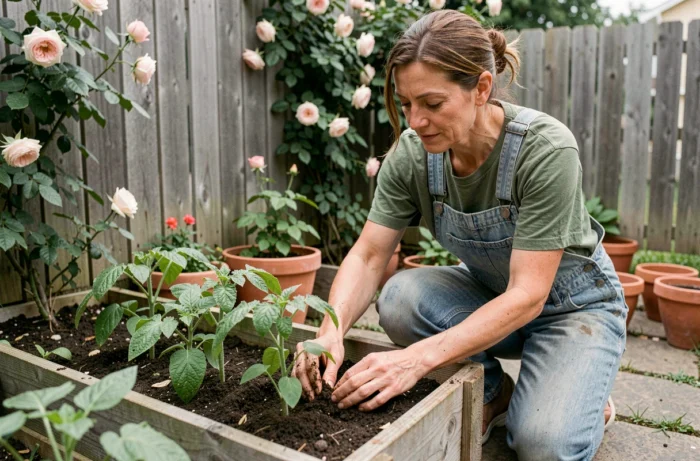
Since the summer of 2024, the prefectural drought orders are reshaping the gardening rules in France. Watering restrictions no longer only concern lawns: they also affect vegetable gardens, newly planted trees, and flower beds, with time slots varying by department and the type of plants cultivated. This regulatory reality profoundly changes how gardeners plan their crops and choose their plants.
Watering restrictions in the garden: what the drought orders concretely change
The regulatory framework has been refined since 2024. The prefectural orders now distinguish between the food zone (vegetable garden, herbs, small fruits) and purely decorative areas. The Yvelines order of August 14, 2026, illustrates this logic: it prohibits watering lawns and flower beds from 11 a.m. to 6 p.m., but allows watering of trees and shrubs under two years old only from 8 p.m. to 9 a.m.
In Haute-Garonne, Pas-de-Calais, Meuse, or certain municipalities in Alsace and Occitanie, the prohibited time slots cover most of the day. The national system operates in progressive levels: vigilance, alert, reinforced alert, crisis. At each level, the constraints become stricter.
The key point to remember: a nourishing vegetable garden often benefits from tolerances that lawns no longer have. Gardeners who share their harvests on social media do not always show that they water between 8 p.m. and 9 a.m., during a specific time slot set by their prefecture. To follow these regulatory developments department by department, the news on Jardiniers info regularly compiles the measures in force.
Drought-resistant plants: adapting your garden to recurring summers
Watering restrictions are not a one-time phenomenon. They return every summer, sometimes as early as spring in southern France. Rather than enduring the time slots, some gardeners are rethinking the composition of their flower beds and vegetable gardens.
Low-water plants for flower beds
Lavenders, shrubby sages, yarrow, and ornamental grasses can withstand weeks without water once well-rooted. These Mediterranean or steppe plants are no longer reserved for the south: they are now being planted in gardens in the Paris Basin or the Grand Est, where summer heatwaves have become recurrent.
Thick mulching (several centimeters of shredded material or straw) reduces evaporation and protects soil life. Combined with ground cover plants like creeping thyme or sedum, it limits the need to water decorative areas, the ones that the orders restrict first.
Vegetable garden and water management: the important variety choices
In the vegetable garden, certain varieties of tomatoes, squash, or beans tolerate water stress better than others. Old varieties adapted to dry soils (such as “beef heart” tomatoes from the south, Charentais melons) are making a comeback in seed catalogs.
Drip irrigation remains the most compatible watering technique with restrictions: it targets the root zone and reduces waste through evaporation. Combined with a timer set to the time slot allowed by the local order, it allows compliance with regulations without sacrificing production.
Rainwater harvesting: an investment encouraged by regulations
Rainwater harvesting has shifted from being an ecological option to a practical solution in the face of restrictions. Underground or above-ground tanks allow for the storage of water collected in the fall and winter for use during critical months.
Several points deserve attention before installing a system:
- The tank volume must correspond to the collected roof surface and the actual needs of the garden, not an arbitrary figure. A tank that is too small empties after a few waterings, while an oversized tank represents unnecessary costs.
- If the collected water is connected to the inside of the home, a declaration at the town hall is mandatory, and stricter health standards apply.
- Maintenance (filtration, annual cleaning, checking connections) determines the quality of the stored water and the lifespan of the system.
During drought crises, stored rainwater remains usable when network water is restricted. It is one of the few levers that offers real autonomy to the gardener.
Gardening trends 2026-2027: what is emerging beyond restrictions
Water constraints are accelerating underlying trends. The dry garden, inspired by Mediterranean landscaping, is gaining ground in landscaping projects. Gravel, dry stones, and low walls are gradually replacing lawns in new gardens, including in the Paris region or the north.
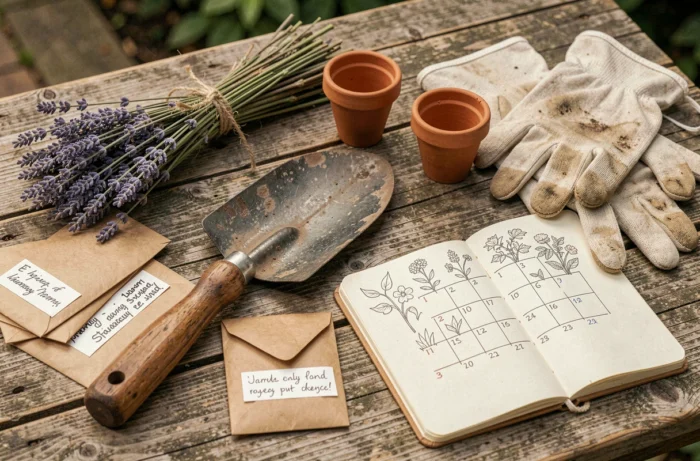
The raised bed vegetable garden continues to grow, especially in urban areas. This format allows for better control of the substrate and watering, two decisive parameters when water is rationed.
Field feedback diverges on one point: permaculture, often presented as a universal solution, requires a living soil and permanent mulching that do not suit all contexts (waterlogged clay soil in winter, windy plots where the mulch blows away). Gardeners testing these methods observe very variable results depending on their region and type of soil.
The French horticultural sector is also repositioning itself, emphasizing local production and varieties adapted to the climate. This movement aligns with the concerns of amateur gardeners: choosing plants that survive without constant artificial watering.
The news in gardening is no longer limited to sowing calendars and plant sheets. It now includes water law, variety selection in the face of climate stress, and each gardener’s ability to store their own resources. These three axes will determine, season after season, how French gardens will evolve.